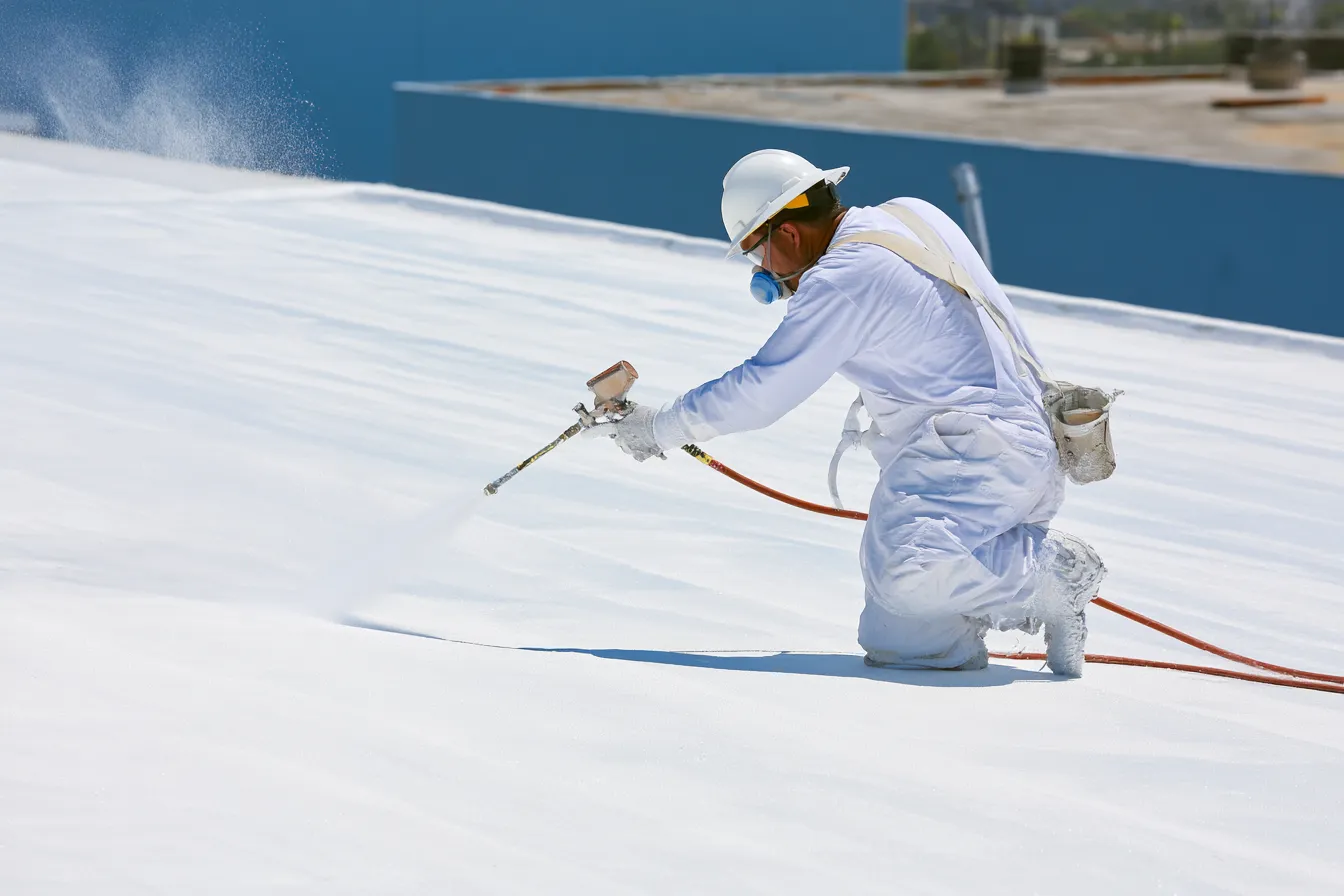
Commercial Roofing in Elkins, AR
Commercial roofing in Elkins is mostly small and low-slope. On those roofs the question is nearly always drainage and the condition of the membrane.
Flat Roofs On Elkins Buildings
Commercial roofing here means something specific. Elkins covers just under four square miles and its commercial buildings are shops along the Highway 16 corridor, shelters, small workshops and outbuildings, so the work is small low-slope roofs rather than warehouse acreage. A low-slope roof does not shed water the way a pitched one does; it moves water slowly toward drains that must stay clear and across seams that must stay sealed.
Standing water is what ends them. It finds the weakest seam, adds load the structure was never asked to carry permanently, and accelerates everything underneath it. On buildings this size one blocked outlet can hold water over a third of the roof, which is why a survey mapping where it sits an hour after rain tells an owner more than any walk on a dry day.
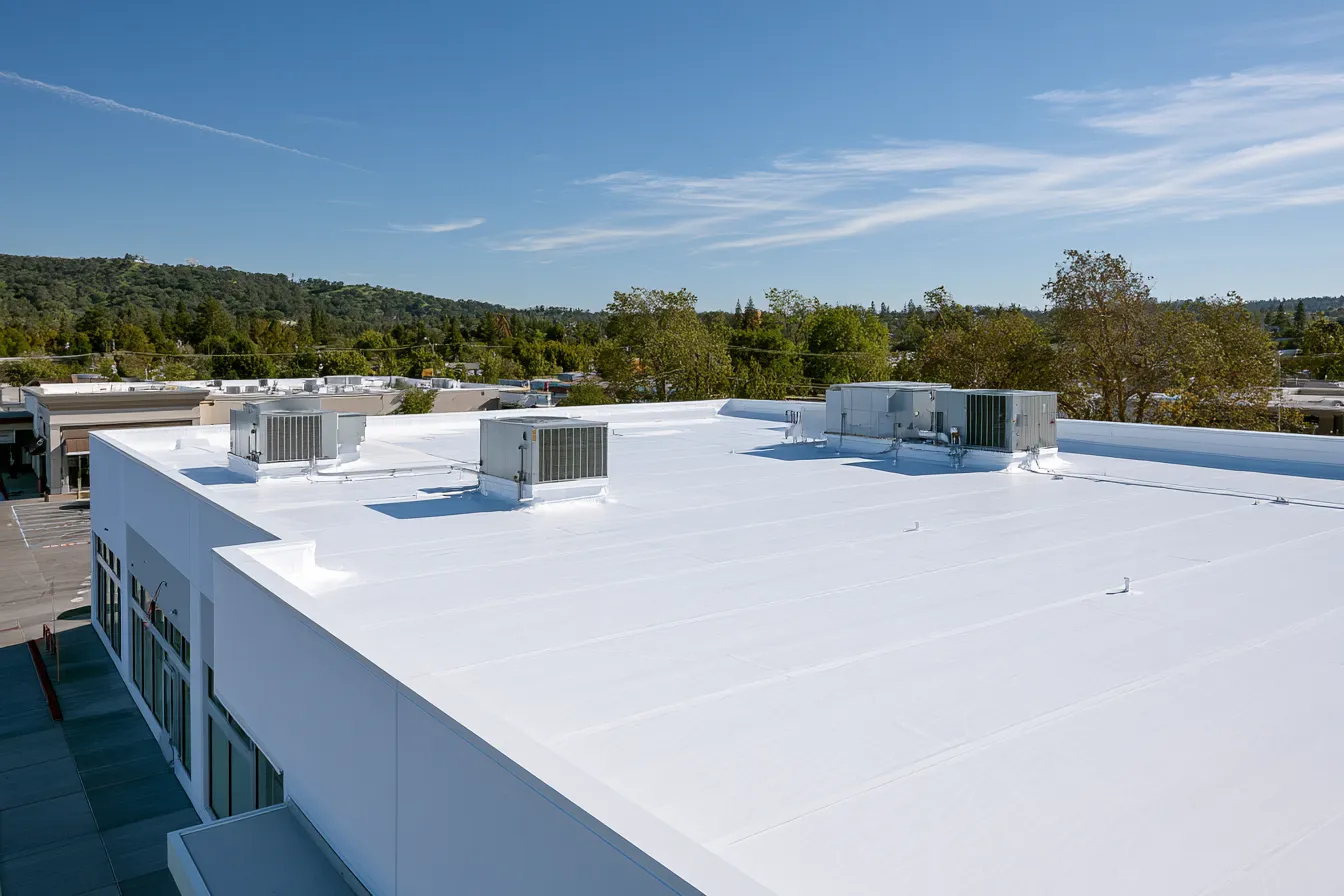
What goes on an Elkins low-slope roof
Low-slope buildings solve one problem, which is getting water off a surface that barely tilts. Four coverings do it in different ways, and which one belongs on a building depends on what is under it and how the roof is used.
TPO and PVC
Thermoplastic sheet rolled out and welded seam to seam with heat, so the joints fuse into one surface. The weld is the whole system: done right it outlasts the sheet either side of it, and done poorly it is the first thing to open.
EPDM
A rubber membrane, usually dark, seamed with adhesive or tape instead of heat. It has a long record on simple shapes and takes temperature swings well, which matters on a building that bakes in July and freezes in January.
Modified bitumen
Asphalt sheet in layers, closer in feel to a traditional built-up roof. It suits buildings with heavy foot traffic or a lot of rooftop equipment, where a puncture is a question of when.
Coatings
A liquid-applied layer that renews a roof still structurally intact. It is not a repair for a wet or failing deck, and anybody offering to coat over standing water is selling you a delay.
Low-slope work on an Elkins building
On buildings this size the work sorts by what the roof needs rather than by what covers it. These four cover nearly everything a small Elkins commercial roof asks for.
- 01Membrane repair
- Seams, laps and penetrations resealed where the system has opened up. Nearly every low-slope leak begins at one of those three rather than in the field of the sheet.
- 02Drainage
- Drains, scuppers and slope corrected so water leaves rather than sits. It is the most consequential work on a flat roof and the least visible once it is done.
- 03Coatings
- A restoration option over a substrate that is still sound, extending service life without a tear-off. It is not a fix for a wet or failing system and should never be sold as one.
- 04Condition surveys
- A written record for an owner choosing between repair, recover and replacement, or checking a roof before a purchase. It is the cheapest way to stop a surprise becoming a capital decision.
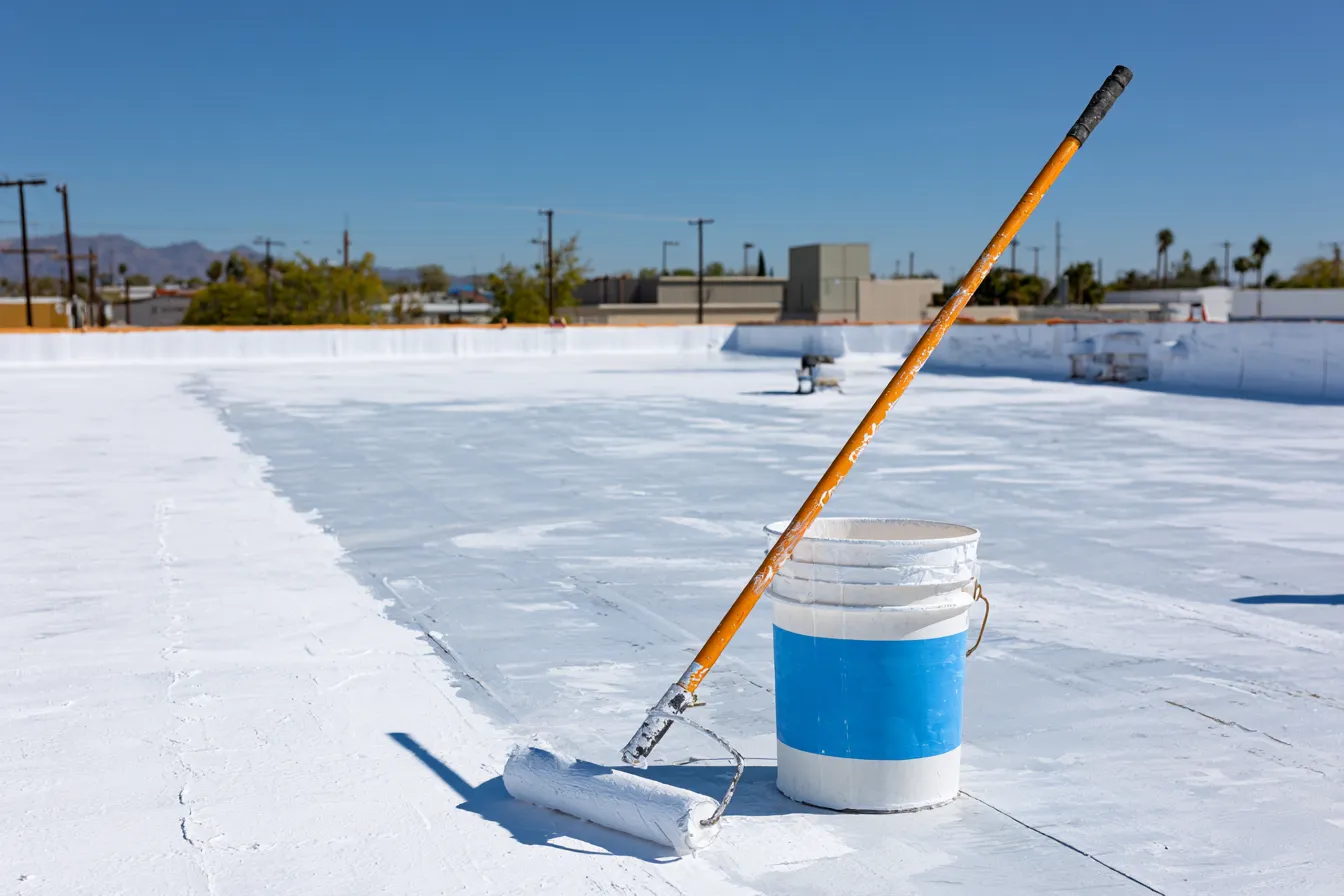
On a low-slope roof the question is usually repair or recover, and standing water settles it.
How An Elkins Commercial Job Runs
The order protects the building. Nothing is priced before the roof has been walked and the drainage understood.
The building gets surveyed
Membrane, seams, flashings, curbs and every penetration, plus where water goes once it reaches the edge. Standing water a day after rain is the detail that changes the job more than any other.
The substrate is tested
Core cuts or a moisture scan where the survey suggests wet insulation, because a covering laid over saturated board fails early no matter how good the sheet is. What turns up is shown to you before anything is specified.
The specification is written against use
A warehouse and a storefront carry different traffic and different equipment, so the specification follows how the building is used, and the schedule is something to settle against your operating hours before the work is booked.
What Elkins building owners settle first
Q1Can a flat roof be shingled?
Q2Is a coating a repair?
Q3Why does water sit on my roof after rain?
Q4Do commercial roofs need permits in Elkins?
Walk the building with somebody who knows flat
Say what the building is doing and have the roof surveyed before any number is discussed. You deal with one person, and there is no obligation attached to the walk.