Roof Inspection in Elkins, AR
A roof inspection in Elkins is mostly ruling things out. What it leaves you with is a record of the roof as it stands today, useful whether or not anything needs doing.
Inside An Elkins Roof Inspection
An inspection starts past the shingles, which is the obvious part and the least informative. What carries the story is everything installed through the roof: pipe collars, step and counter flashing, valley metal, ridge ventilation, and the fasteners in any exposed panel. On this housing those give out before the field does.
Where the attic can be reached it adds what the surface cannot say. Daylight at a penetration, staining on the underside of the sheathing, damp insulation on the shaded planes that dry last: that reads from the inside. Access varies house to house, so the roofer tells you at the time whether it was reachable and what it showed.

What the roofer reads on an Elkins roof
A walk covers four areas and produces a written record of each. What it finds gets photographed where it sits, on your own slopes, never pulled from a catalog.
- 01The surface
- Granule condition, sealing, curl and any impact marks, read plane by plane. Weather-facing slopes and shaded slopes wear at different rates and get read separately.
- 02Penetrations and metal
- Boots, collars, step and counter flashing, valley metal and exposed fasteners. This is where a roof of this age is most likely to be leaking while the field still looks sound.
- 03The attic side
- Daylight, staining, damp insulation and the state of the sheathing from below, where accessible. It is the only place some failures are visible at all before they reach a ceiling.
- 04Drainage
- Gutters, downspouts and where the water is actually put once it leaves the roof. On a hill lot the discharge point matters as much as the capacity does.
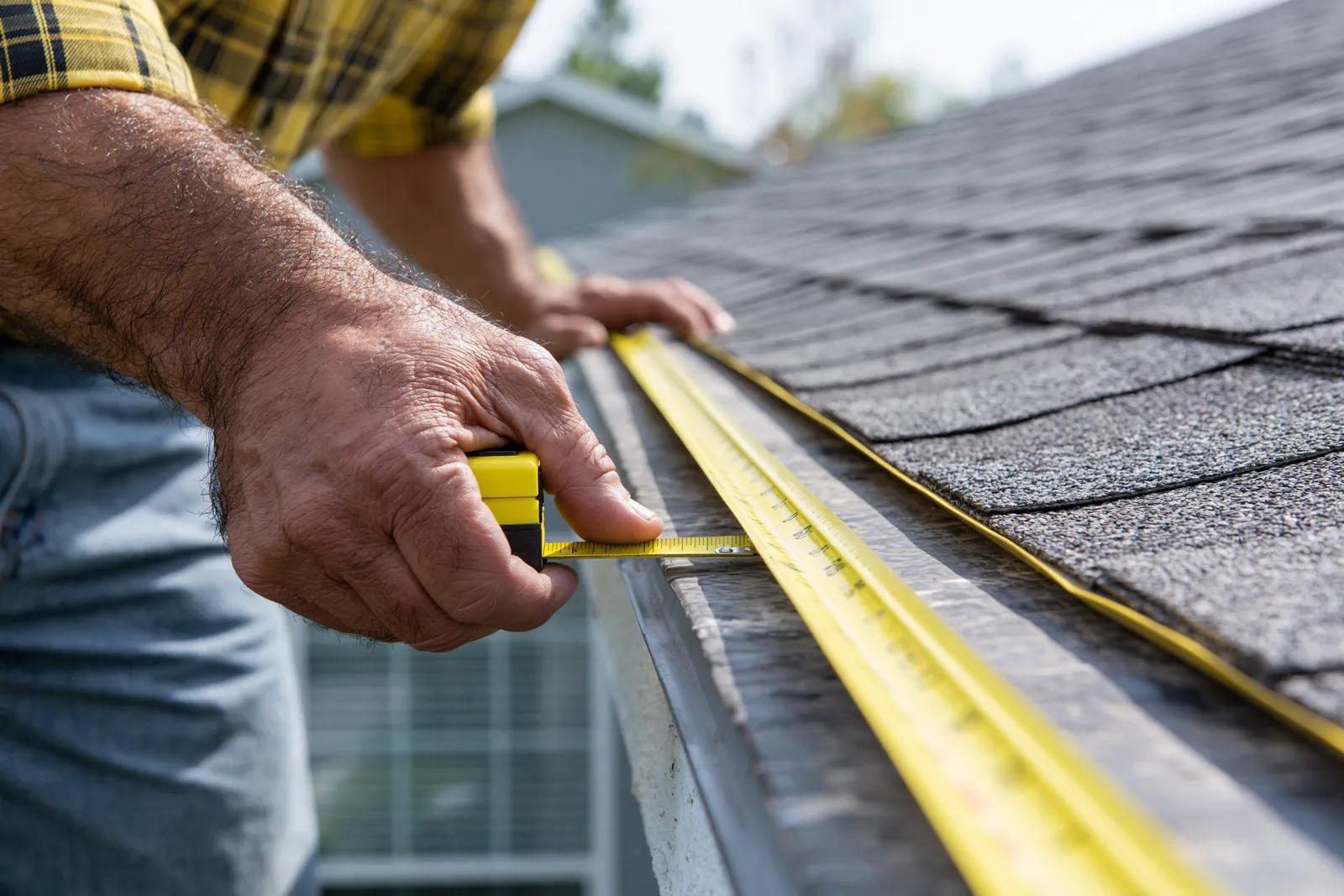
What turns up is written down and photographed in place, so the record and the roof agree later.
What An Elkins Inspection Walks Through
The visit has a fixed order and it does not skip the parts that are inconvenient to reach. Each of the three below covers ground the one before it cannot, which is why the sequence matters as much as the checking.
The slopes get walked
Covering condition, then every accessory installed through it: pipe collars, step and counter flashing, valley metal and any exposed fastener.
The attic gets opened
Daylight at a penetration, staining on the underside of the sheathing and damp insulation all say things the surface cannot.
You get the write-up
What is sound, what needs attention before long and what needs doing now, kept as three separate answers.
Good reasons to look before anything fails
There are ordinary reasons to have a roof looked at before anything fails. These are the ones that come up most here.
- A storm went through and you want the condition recorded before anything changes, which in a town that logged three separate hail hits inside one year is not a remote scenario.
- You are buying or selling and want the roof described by somebody who stood on it instead of estimating from the driveway.
- Repairs have started repeating in one area, which is usually a symptom and not bad luck and is worth diagnosing before it is repriced.
- The roof has reached the age where the useful question is how long is left, not whether something is currently wrong.
An inspection that finds nothing wrong is an ordinary result and a useful one to hold.
An Elkins roof inspection costs nothing
Nothing, for the walk or the write-up. What carries a price is the work the roof turns out to need, and that figure goes in writing after a roofer has been up there. A few things about the roof itself decide where it lands.
Book A Walk- Pitch and access
- How many planes
- What the deck turns out to be
Two Eras Of Elkins Roof, Two Failure Modes
An inspector on an Elkins roof is not looking for one thing. The housing here splits across a wide span of build eras, and the two ends of that span fail in different places, so the search changes with the address.
On the older houses near the original grid the assembly itself is the question: what has been layered over what, how many times, and whether the structure under it was ever meant to carry that. On the newer wave the covering is often still doing its job while everything installed through it has quit.
- 01On the older houses, the buildup
- Successive coverings, patched transitions and framing that predates current practice mean the interesting findings are structural, and most of them are reached from inside the attic where the framing is visible.
- 02On the newer houses, the penetrations
- Boots, sealant beads and exposed fasteners reach the end of their service life well before the field of the roof does, which is why a sound-looking newer roof can still be the one that is leaking.
Knowing which of those two roofs is under you changes where an inspection starts.
Inspection questions worth settling in Elkins
Q1What does an inspection actually cover?
Q2Will I get something in writing?
Q3Is an inspection worth it if nothing seems wrong?
Q4How long does it take?
Have somebody walk it while it is quiet
Have somebody walk it while nothing is urgent and get the condition on record.